


Hey folks,
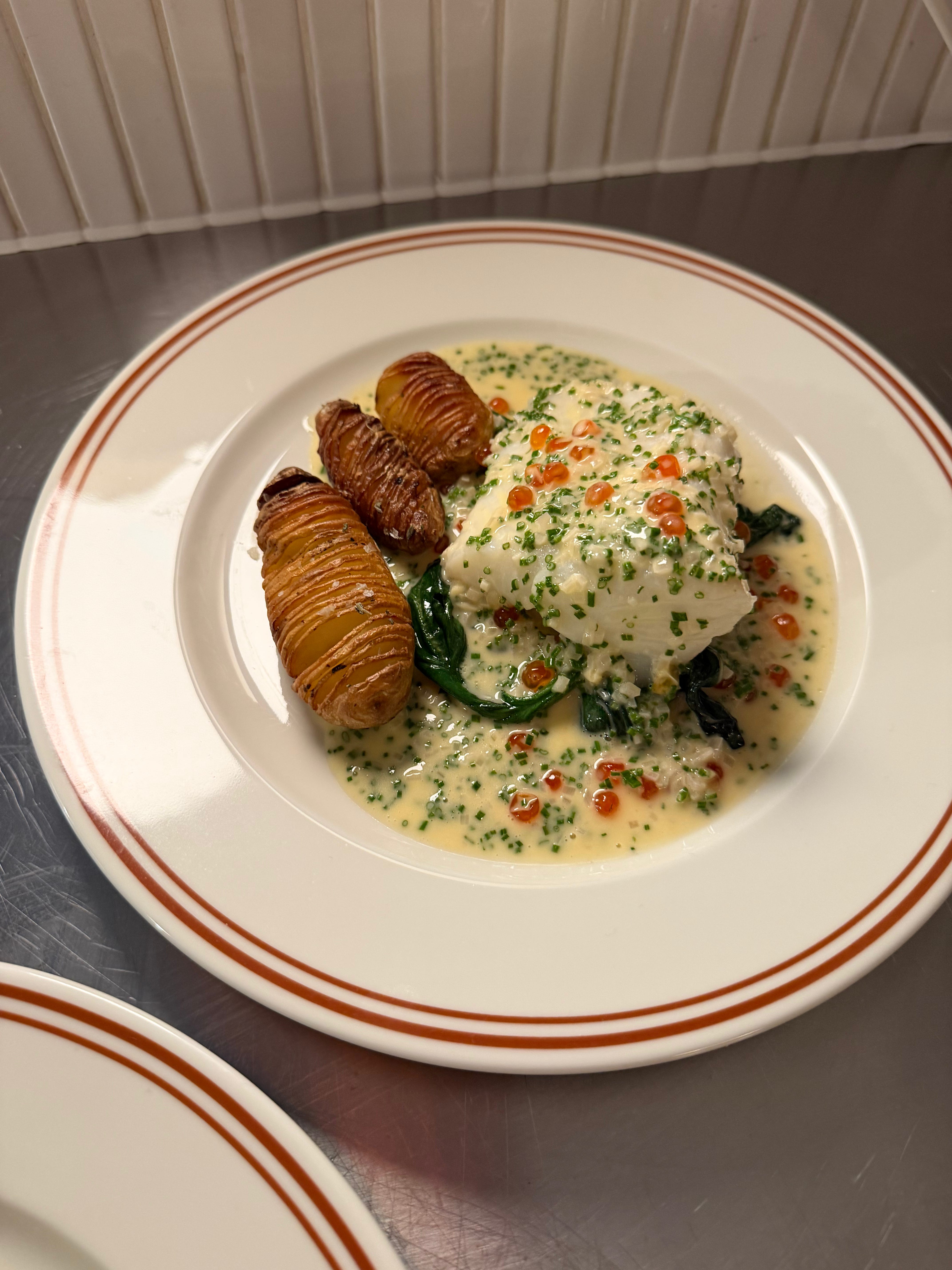
Welcome back to How I Cook+. This week we’re learning a Classic French sauce, the Beurre Blanc. It’s a sauce of two halves, a reduction and an emulsion, and is a great blank canvas that you can finish with any flavours you like. I’ve used trout roe and chives here, but I’ve got a bunch of different options on the newsletter. You’ll also learn to make very good hasselback potatoes and garlicky spinach.
Thanks for reading,
B x
The cooking at Orasay in Notting Hill (now the burger-famous, Dove) was the a satisfying marriage of classic technique and a modernist, global pantry. Fish was cured in dashi brine, scallop roes dehydrated and blended with porcini into umami-rich powders, potatoes mashed and fermented for bread service, classic French sauces seasoned with white soy and fermented citrus. Old school meets new school.
I spent a year in the kitchen there, soaking up this delicious fusion of past and present, learning how to classically prep and cook whole fish, whip up fish stocks, butter sauces and chocolate mousse. I’d dare to say that during the 12 months I spent cooking in that gloomy basement kitchen, I grew more and picked up more of the enduring technical skill than across the rest of the years I spent in kitchens. It certainly rewrote a few things I’d learnt beforehand, recipes that had been hammered home as the one and only way to get from point A to point B, it was all very, “my way, or the highway”.
Despite what my early head chefs would have you think. There are no truly definitive ways to cook, there’s always another route to take, tweak to make or avenue to consider when on the journey from the raw ingredient to the edible. Even when making the stone cold classics like sauce au poivre, mayonnaise, chicken stock, or French meringue, all mainstays of foundational European cooking, a quick google or page-turn will yield literally thousands of different recipes for the same product. What I’m trying to say is that despite people may have told you about cream in beurre blanc being sacrilege, I don’t care (this will make sense shortly).
If you plodded down the stairs to the bathrooms at Orasay to take leak, wash your hands, have a break from whomever you’re eating with and/or, judging by the amount of near untouched plates of delicious food that were returned to the kitchen, do a bump, you cannot miss the poky, sweltering kitchen that thunders along beneath the dining room. As the door swings back on forth you’ll catch glimpses of the fire-spitting grill, and the fresh hell it provides for the seafood that hit the bars. The formula for this seafood was fairly simple, and damn near bulletproof;
Buy immaculate fish.
Cook it perfectly in a pan or over live fire.
Drown it in an interesting, delicious sauce.
To stand out from the ever-growing crowd of London restaurants, an equation this simple requires inspired sauce making. Luckily, Jackson and Gareth (chef owner & head chef) had this down to a tee. Smoked bone marrow Bordelaise for grilled John Dory, porcini and roe burnt butter with vin jaune for BBQ’d diver scallops, a thyme and miso rich chicken cream sauce for mussels, a sweet and sour plum number for the crowns of duck and my favourite, a salted kumquat and citrus kosho butter sauce, loaded with soft herbs and trout roe for grilled plaice. All of this kitchen jargon can be translated to; completely delicious, clever cooking, rooted in classic technique.
I still lean on the sauce making principles I scooped up at Orasay and today I’m sharing a little of it with you. Today, we’re going to make a classic, but delicious, beurre blanc or butter sauce.
WHAT IS BEURRE BLANC?
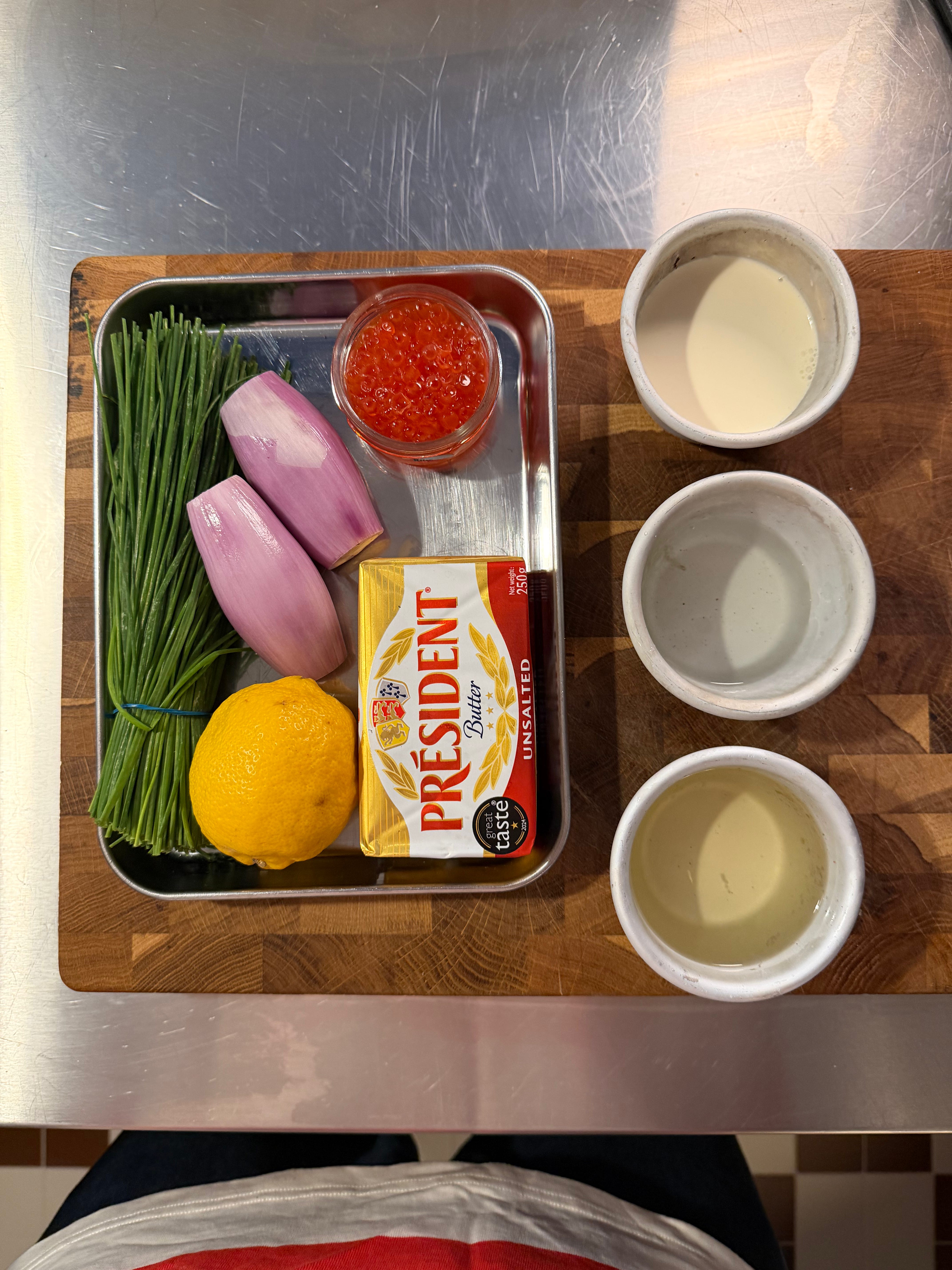
Let’s kick off with a simple breakdown of what beurre blanc actually is and how it’s made. Beurre blanc is a classic, French sauce of two halves. It is prepared by first creating a reduction; gently simmering dry white wine, white wine vinegar, and finely minced shallots until nearly all the liquid has evaporated. Cold butter, cut into cubes, is then whisked into the reduction gradually, melting just enough to form a stable emulsion, but not so far that it breaks, separating into milk solids, butter fat and water. The result? A rich, thick and balanced savoury sauce.
The name beurre blanc, meaning “white butter,” likely refers to the sauce’s creamy white appearance, a far cry from the foamy, golden, and translucent look of butter that has broken, melted and separated. Although it may sound delicate, complex and a little temperamental, beurre blanc is actually very easy to make and with the addition of a little cream, pretty forgiving. As long as you keep whisking and avoid letting the sauce get too hot - the most common cause of breaking, it comes together quickly and easily.
THE REDUCTION
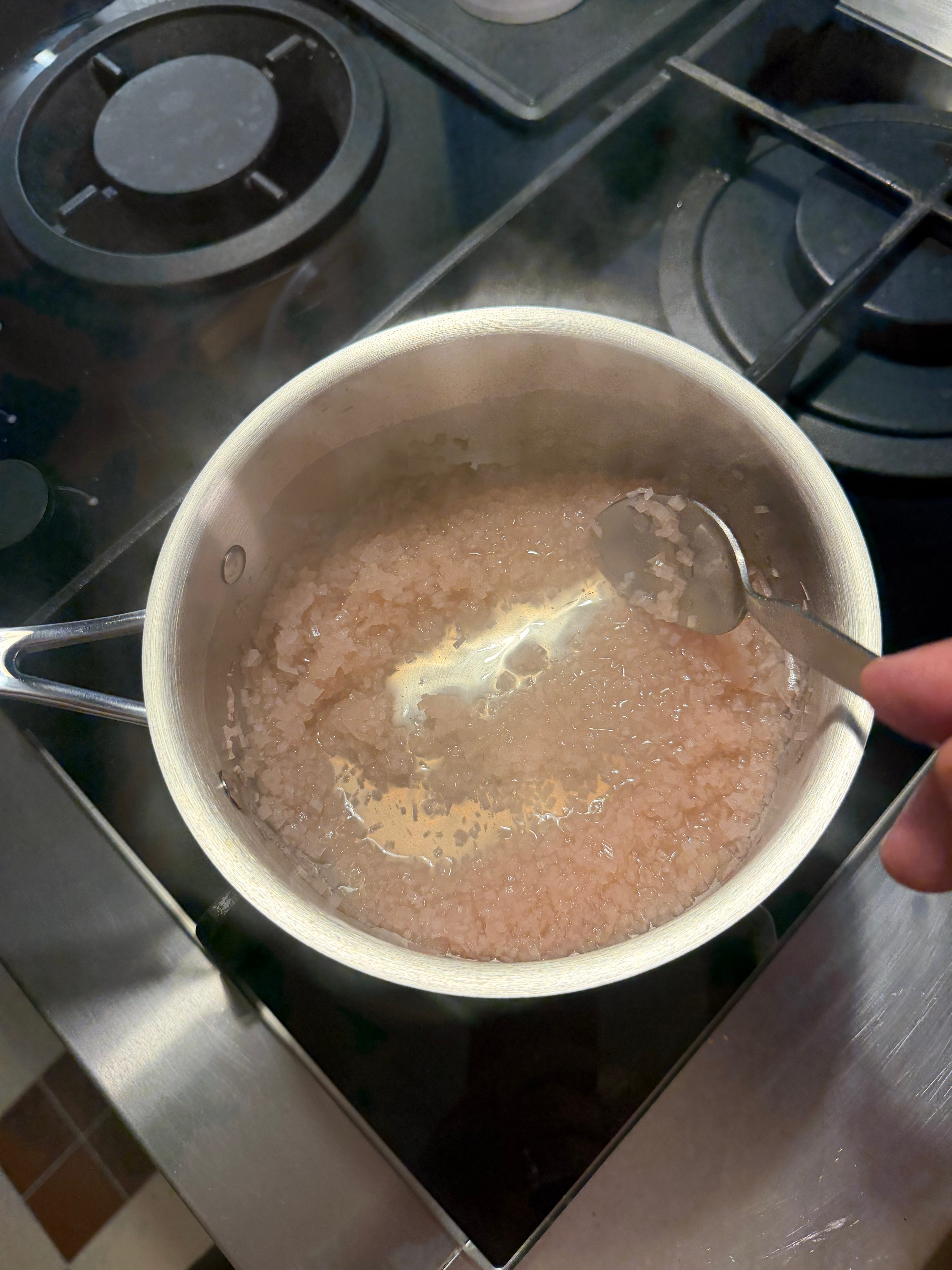
The reduction is crucial to the resulting sauce. It’s extremely important to balance the sweet, sour and savoury notes at the top of the process the reduction completes a lot of quiet but essential work in the sauce…
First, it concentrates flavor. By simmering the wine, vinegar, and shallots, you intensify their acidity and aroma, so the sauce tastes bright and complex instead of dilute once the butter goes in. Second, and more critically, it sets up the emulsion. The reduced liquid is acidic and relatively concentrated, which helps the melted butter stay suspended rather than separating. That acidity lowers the risk of the sauce breaking and gives you a stable, creamy texture. Third, the reduction controls the final balance of the sauce. If there’s too much liquid left, the sauce will be thin and overly sharp; if it’s reduced too far, there won’t be enough moisture to properly emulsify the butter. Reducing it to just a few tablespoons is the sweet spot. In short, the reduction isn’t just about flavor. It’s the structural foundation that allows beurre blanc to be rich, smooth, and stable instead of greasy or broken. Wine and vinegar bring natural sugars and acidity and shallot delivers a soft, savoury note.
THE BUTTER
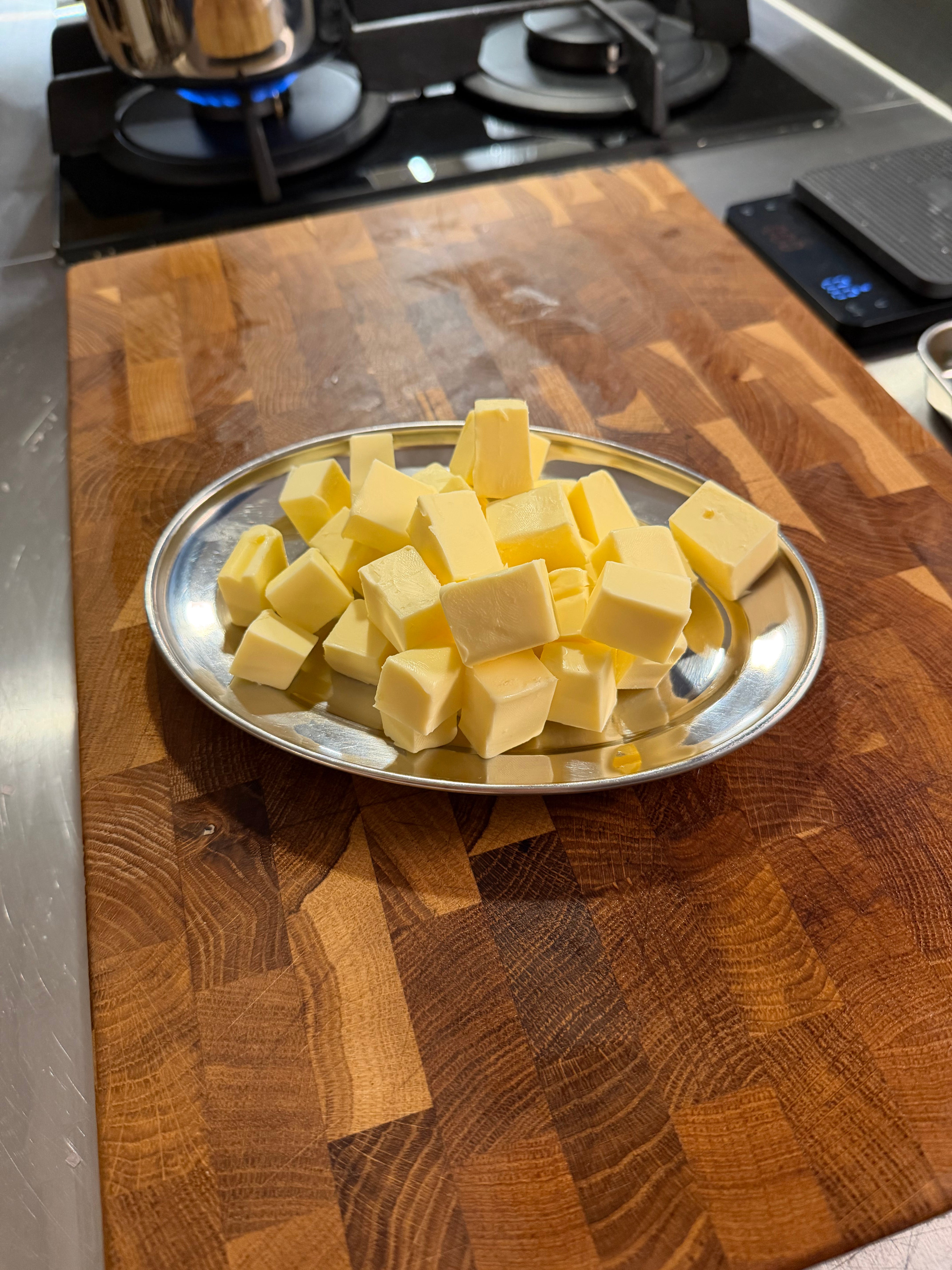
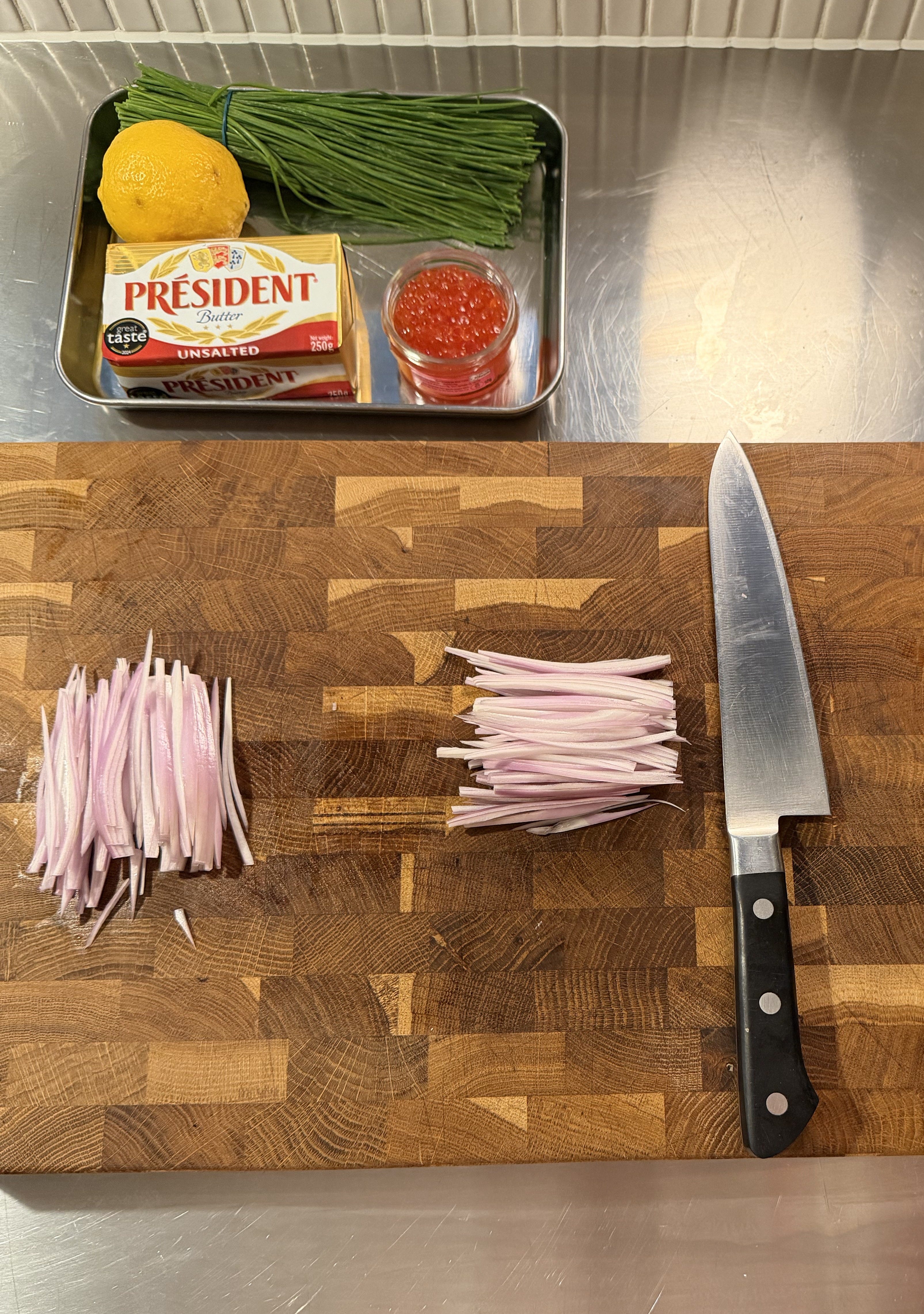
This is going to make up 85-90% of the volume of your sauce, so you better make sure it’s the good stuff. It might sound obvious, but if you a beurre blanc with sh*t butter, it’s going to taste bad. One of the best tasting butters that is widely available in the UK is President. Don’t, for the love of God, use margarine, “light” butter or anything blended or flavoured, it will be naff. My preference is to use unsalted butter over ready-salted stuff, this way, you’re in the driving salt with the seasoning and can get things dialled to your preference.
CREAM - THE “CRUTCH”
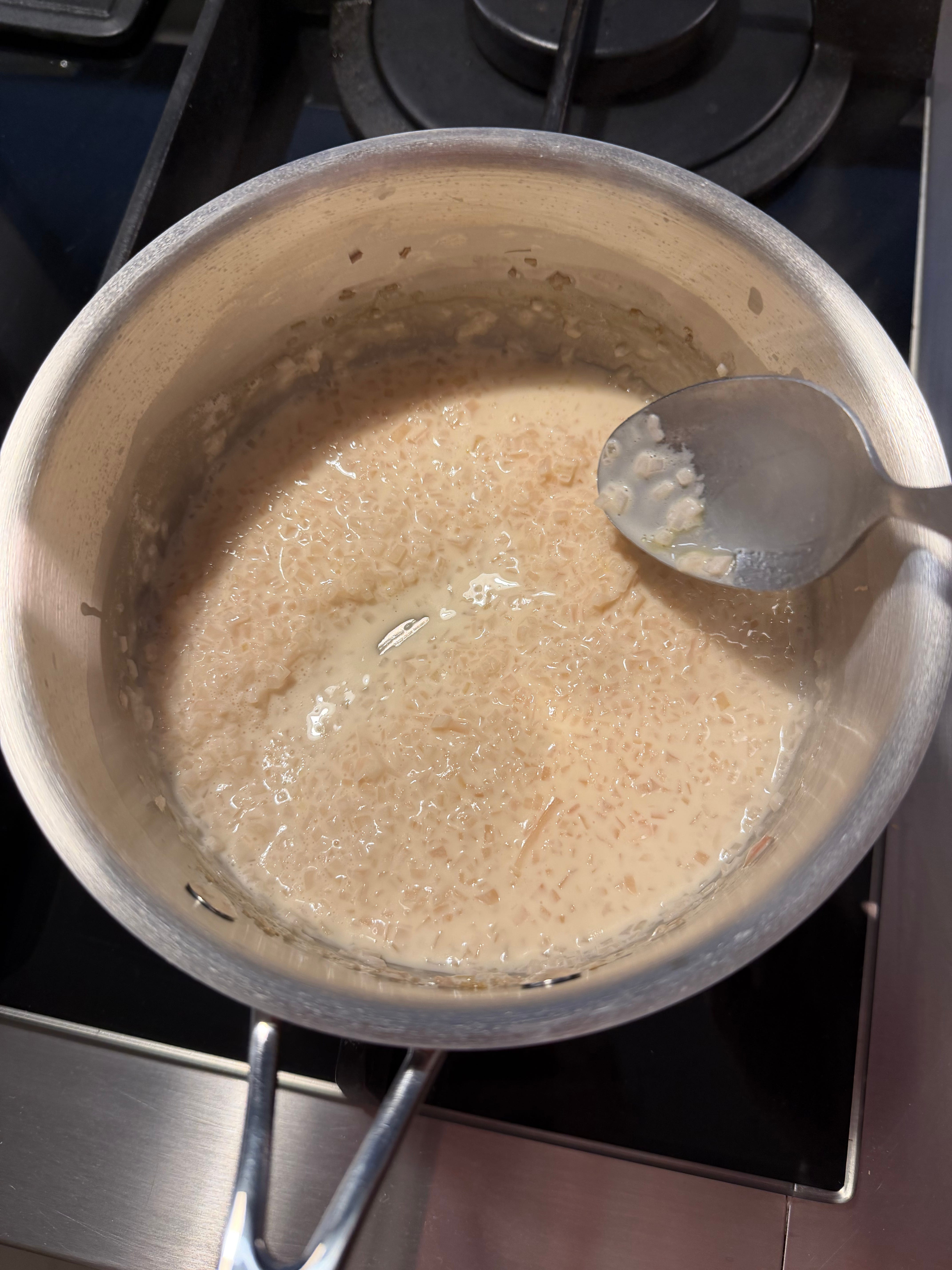
Right, the elephant in the room. It’s smart to add cream to a beurre blanc for insurance, texture, and control. Purists will scoff at this addition, but who cares. Here’s what cream actually does…
Cream contains milk proteins and a bit of water, which make the sauce much more resistant to breaking, stablising the sauce. This is especially useful if the sauce needs to sit for a moment, be reheated gently, or survive less-than-perfect temperature control. A dash of cream can also soften the acidity, classic beurre blanc can be quite sharp. A small amount of cream rounds out the acidity of the wine and vinegar, making the sauce feel smoother and more mellow.
Ultimately, it makes the sauce about 15 times more forgiving. With cream in the base, you have a much wider temperature window. The sauce is less likely to split if it gets slightly too warm or if the butter is added a little too quickly. The purists will argue that this is, in fact, a trade-off. Cream dulls some of the bright, wine-y zing and snap that defines a classic beurre blanc and nudges it toward a richer, more neutral butter sauce. Some chefs love that; the heads don’t.
When it makes sense:
High-volume or restaurant service
When making the sauce for the first time
Sauces that need to hold or reheat
Delicate proteins that benefit from extra richness
When it doesn’t:
When you want maximum brightness and clarity of flavor
When trying to showcase impeccable technique
So cream isn’t completely wrong, it just turns beurre blanc from a high-wire act into a more home cook friendly version. I’ll take that.
MONTER AU BEURRE & FINISHING MOVES
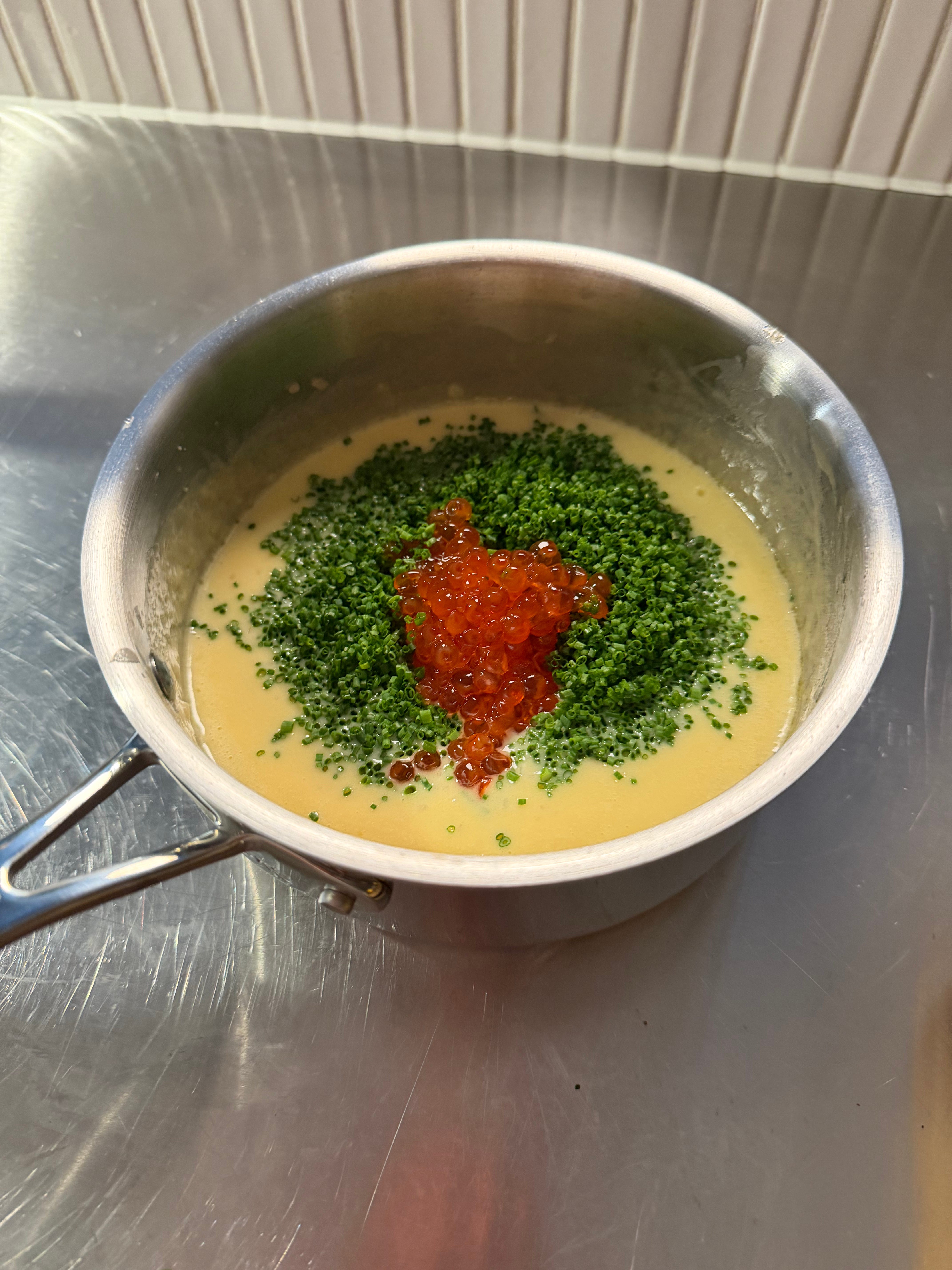
Once you’ve nailed the brunoise, mastered the reduction and cooked out your cream, it’s time to finish the job. The last piece of the puzzle is whisking in the butter, this is the core technique at the heart of a beurre blanc. “Monter au beurre” means literally to “mount with butter” and is one of those small French techniques that makes food taste restaurant-level.
Butter is an emulsion of fat, water, and milk solids. When you whisk cold butter into a warm liquid, the butter melts slowly and its fat droplets disperse evenly through the sauce. This creates a stable, creamy emulsified sauce that has a velvety, silky mouthfeel and a natural shine, that elusive glossy “cheffy” finish. When you mount a sauce with butter, you’re not just adding richness, you’re altering the structure of the sauce.
This technique lives in a very narrow comfort zone… If the sauce is too hot, the butter melts too fast and the fat separates resulting in a greasy and broken sauce. Too cool and the butter won’t melt and you’ll have a weird, lumpy, buttery mess.
Because we’ve added the cream, you can afford to be a little more bold with the heat. I like to have the cream at a bare simmer when I start whisking in cold butter. The fridge-cold fat will cool the sauce in the pan down to the optimal temperature for emulsification. The trick is to keep things moving and if the sauce starts to boil, move it off the heat briefly.
VARIATIONS AND APPLICATIONS
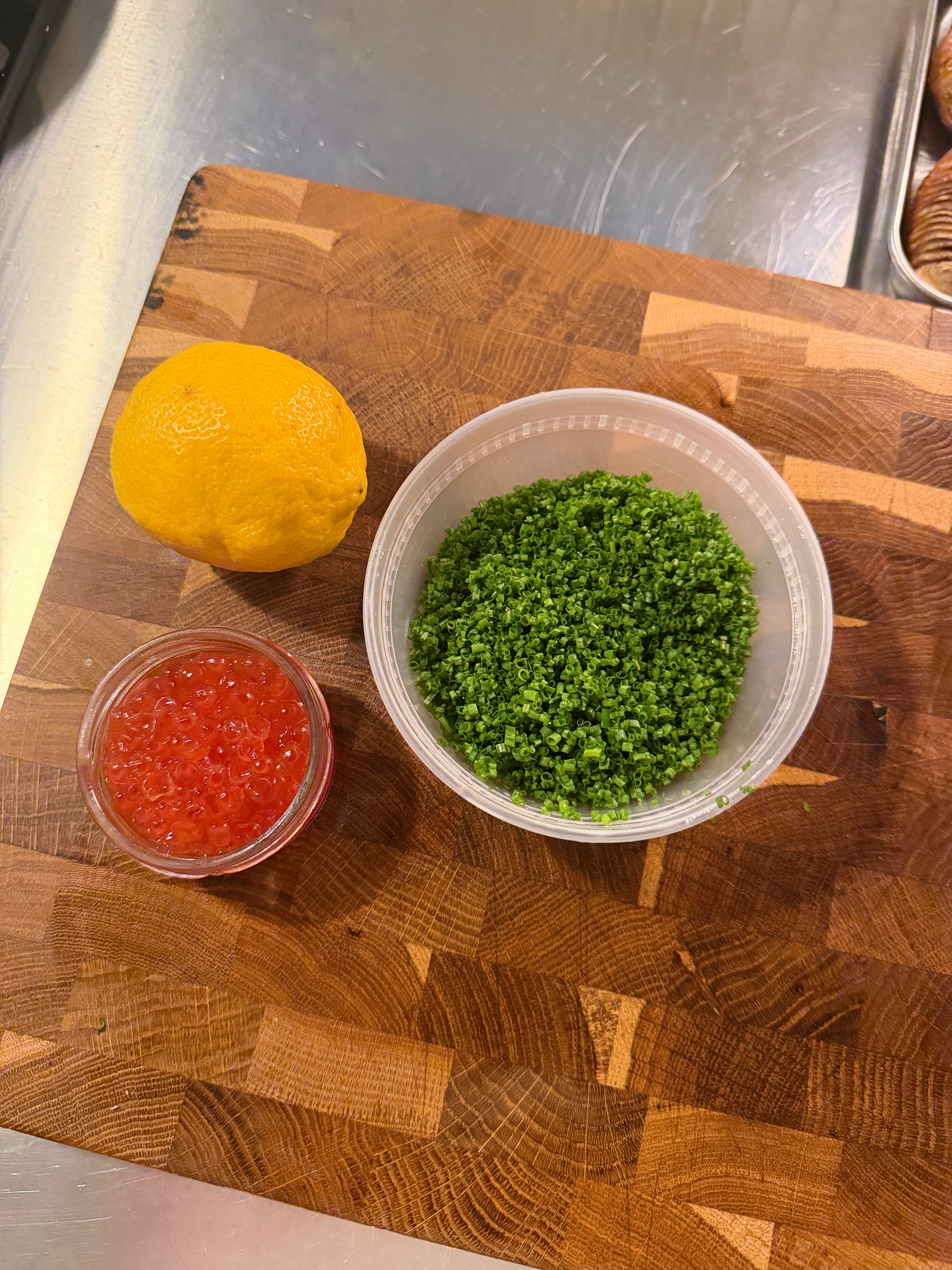
So you’ve landed the plane, you’ve got a pan full of delicious butter sauce and now you need something to dump it on. I’ve given you a recipe for beautiful baked cod, garlicky spinach and crispy hasselback potatoes below, but you can drown lots of different things in butter sauce. Pretty much any seafood will happily throw on a blanket of beurre blanc, but a wedge of baked celeriac, a little pile of steamed asparagus or a piece of poached chicken are also pretty happy alongside butter sauce, too.
As far as changing up the garnish, well the world is your oyster. You could use orange zest and miso, swap the chives for tarragon or torn basil, swap the white wine vinegar for sherry vinegar, add capers, cornichons, little pickled chillies - anything you like. Beurre blanc is such a brilliant blank canvas upon which to build.

Baked Cod with Beurre Blanc
INGREDIENTS