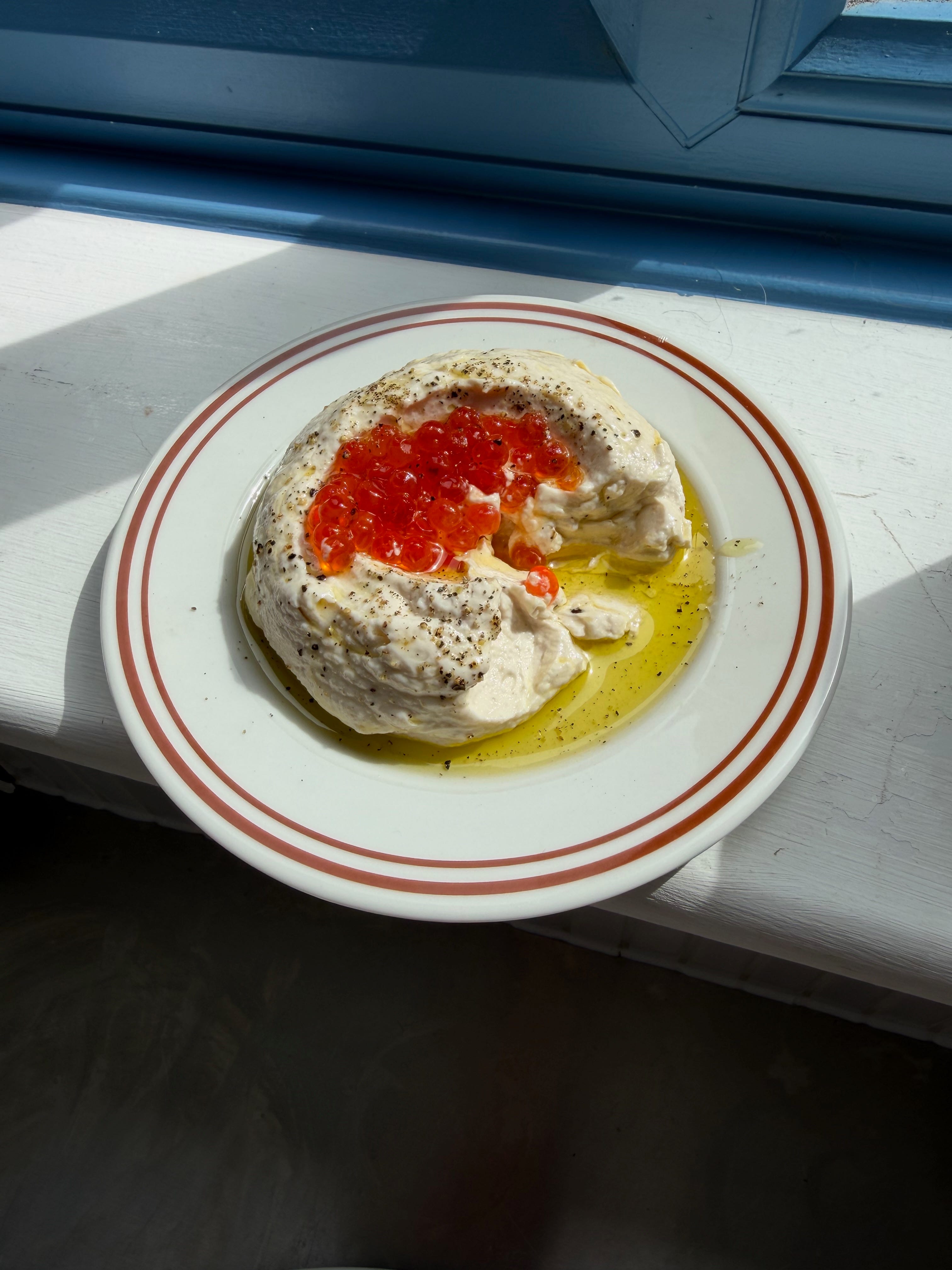
DIY TARAMASALATA
how to make your favourite dip at home.

Hey folks,
Welcome back to How I Cook+.
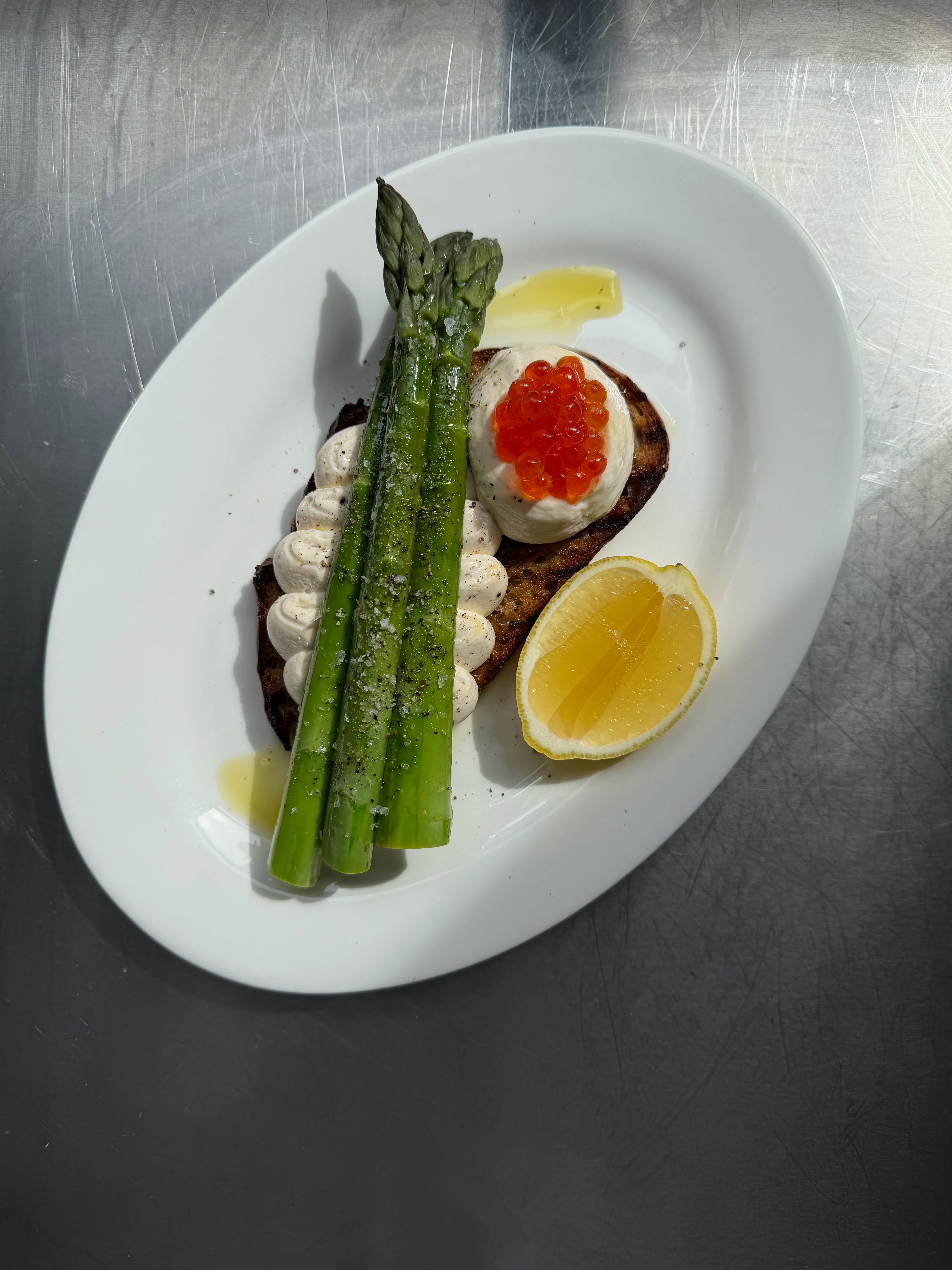
This week we’re taking on smoked cod roe, a fantastic, humble yet surprisingly chic ingredient that rarely makes it into the home kitchen. Today I’m going to show you how to whip it into a fantastic, very simple emulsion, ready to devour with steamed asparagus, grilled bread and a squeeze of fresh lemon juice. This one is worth a trip to the fishmonger.
B x
Smoked cod’s roe, in the same vein as olives, Fernet Branca and oysters, falls into the camp of rarified foods that make you feel like you’ve snuck into adulthood through a side door. Few grow up craving it, there’s no children’s menu version, you encounter it later, likely sitting in a dimly lit restaurant while someone in a faded blue chore jacket says, “it’s incredible on our house made grilled bread”. It lands on the table, you take a dip and suddenly your life forks forever into “Before-Roe” and “After-Roe”. Sure, maybe you’ve had the Barbie pink gloop from the supermarket (I really, really dislike it. Loathe.) before, but my god, the homemade is just different gear.
The first time I encountered the raw ingredient, the big orange lobe, it came vacuum sealed, dense, bronzed, faintly ridiculous. It looked less like food and more like a Victorian paperweight. I was instructed to open it, peel it and blend it with lemon juice, white pepper, milk-soaked bread and raw garlic before steadily streaming in a blend of bitter, peppery olive oil and flat, neutral vegetable oil. The result? A salty, smoky, deeply savoury emulsion that when tasted, bypasses the stomach and rockets directly to the brain. Like bottarga, fish sauce or salted anchovies, it tastes ancient, like something eaten by Vikings in a longboat or those mad fishermen from The Lighthouse.
Take a look at a raw cod roe and it’s pretty gnarly. Impossibly, however, this concoction of bread, smoked fish eggs and oil is very chic. Another example of the magic trick of smoked and/or preserved fish generally; existing simultaneously in the worlds of scarcity and luxury. See: kippers, Arbroath smokies, anchovies, bottarga, tarama, caviar. Foods born from preservation and penny-pinching now arrive on small earthenware plates in restaurants where the wine list includes several orange options and at least one slightly too expensive pet-nat “with attitude.”
The best thing about making your own taramasalata is that you get to make the ordinary feel rather special. Having this waiting in the wings makes a slice of brown toast a very indulgent, chic snack. Buttered potatoes become deliciously Scandinavian and a pair of soft boiled eggs feel like a plate served in a tiny restaurant where everyone inexplicably owns excellent knitwear and those weird gardening clogs. What are you waiting for? Go to the fishmonger.
TARAMA TIPS
The first job is sourcing. Call your fishmonger or order a pack online, it really isn’t difficult. Once it arrives, portion it up and freeze it. A whole cod roe will make a shit load of tarama, more than you can eat, so cut it into chunks, wrap and freeze for later. That’s the pro move, and kind of your only option as it’s quite hard to buy in smaller pieces. It’s not too expensive of a raw ingredient and will yield a bucket load of taramasalata and nearly endless aura at your next dinner party - good bang for buck ratio here.
Right, we’ve covered off emulsions before on this newsletter, but just as a little refresher; an emulsion is a mixture of two or more liquids that usually do not mix, oil and water, where one is dispersed as small droplets within the other. The resulting mixture has a creamy, thick, rich texture and is a joy to eat. Here, you’re marrying fish eggs, water, bread and oil. The proteins in the eggs and starches from the bread are acting as your emulsifying agent here. Tarama is a pretty forgiving emulsion and is very stable, so you can be pretty cavalier with your oil, pour with abandon and get it in there. I blend the absolute pants off my tarama for an ultra smooth, luxe texture, so make sure you let it run for a while. The ice water helps keep things cool despite spending a long time in the blender. Folks often forget the friction generated by the blades does in fact heat up your food.
Cod roe can be pretty bitter straight outta’ the packet and will require some delicate balancing and seasoning. Lean on lemon juice here, and if you need it, a little spoonful of sugar. Remember that if things are tasting too strong, the oil in your emulsion is going to mellow things out. If it’s absolute fish-town when you have a taste, add a little more water and stream in more vegetable oil. Add too much olive oil and you’ll be doubling down on the bitter character.
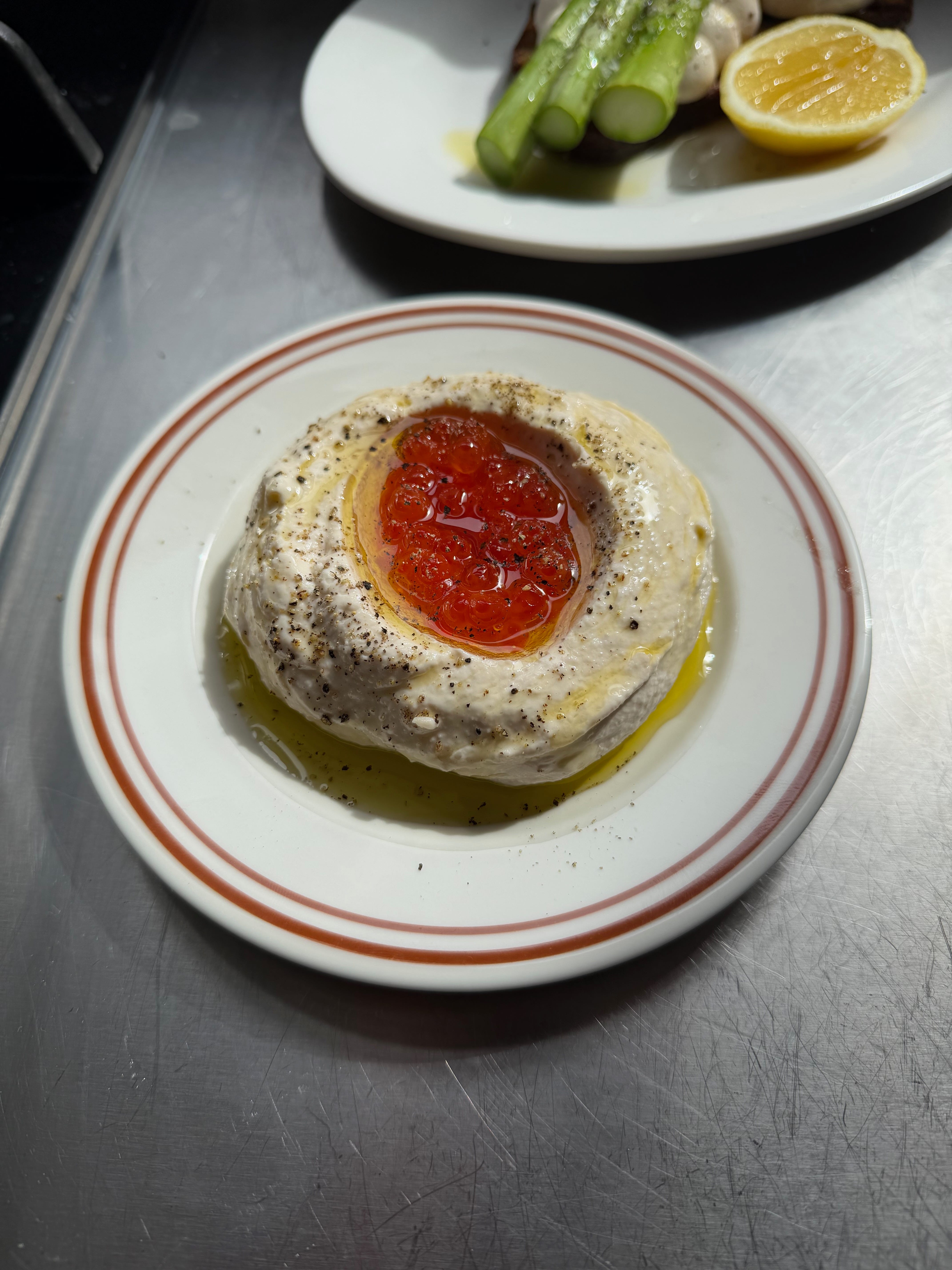
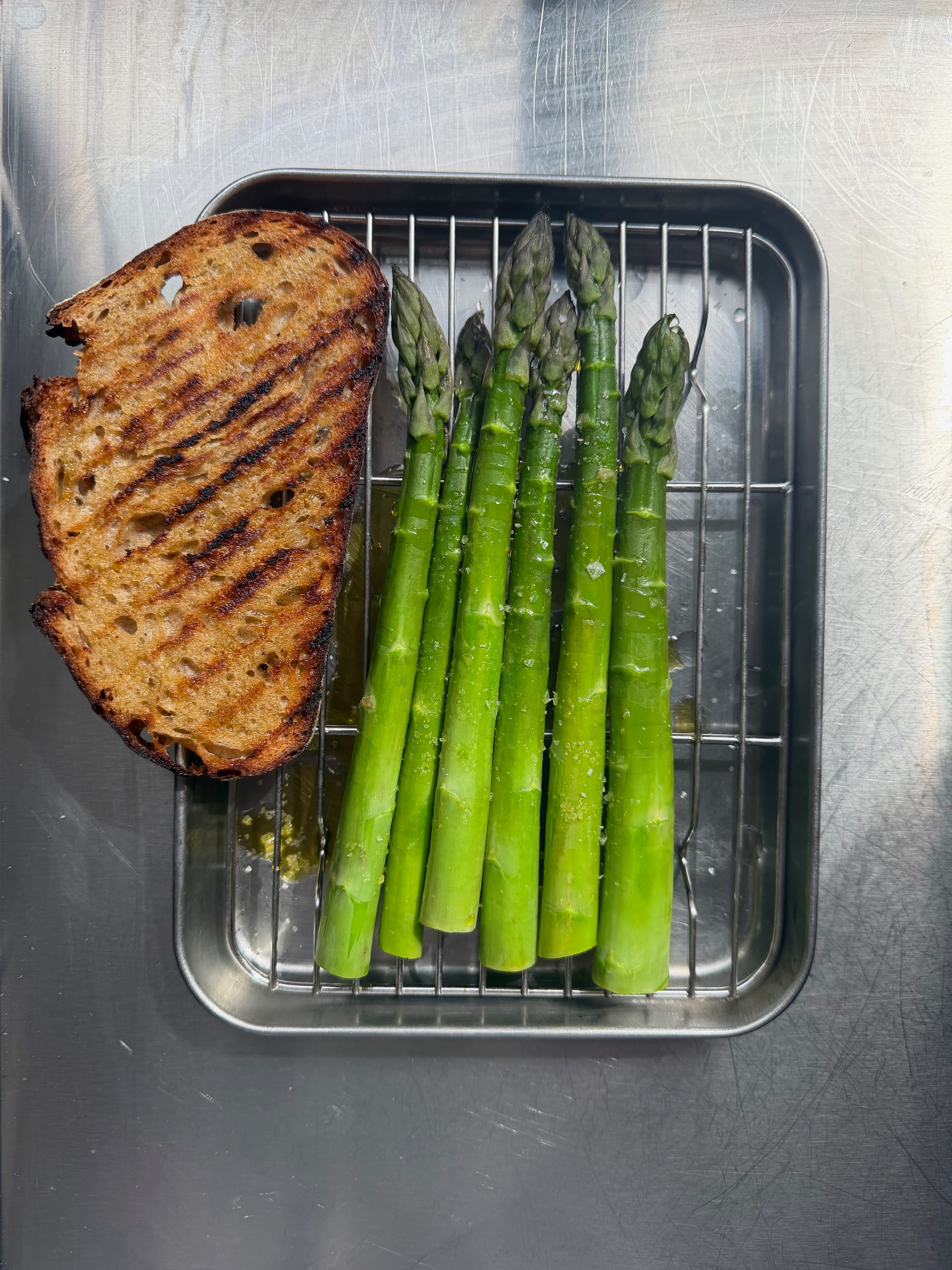
Store your tarama in an airtight container in the fridge for 5 days max. I quite like to store it in a piping bag, ready to rock. For today’s newsletter I blanched some asparagus and popped open a tin of trout roe for a fancy lunch. For asparagus cooking tips, check this newsletter out.

Homemade Taramasalata