

BOOZY CRÈME CARAMEL
an easy festive dessert.

Hello,
Welcome back to How I Cook, the home of technique-driven home cookery. I’m starting to realise that all of my favourite desserts are French…
This week, a dessert for the christmas table, or any table to be honest. Crème caramel is a rock solid recipe to have in your arsenal and if you think it’s reserved for the fancy French bistro around the corner, think again. Also, if you think a creme caramels always come in those little plastic pots with the silver foil tab on the bottom, think again. They’re a dead-easy but very elegant little pudding that can be tweaked and customised to your liking. Today, we’re making one infused with a delicious sweet French wine called Sauternes, but you could leave that out or swap for anything you like, I’ll cover off a few more options below.
We’ve also got music from your favourite musicians favourite musician, Liam Kazar and the best burger in London.
Thanks for reading,
B x
CRÈME CARAMEL
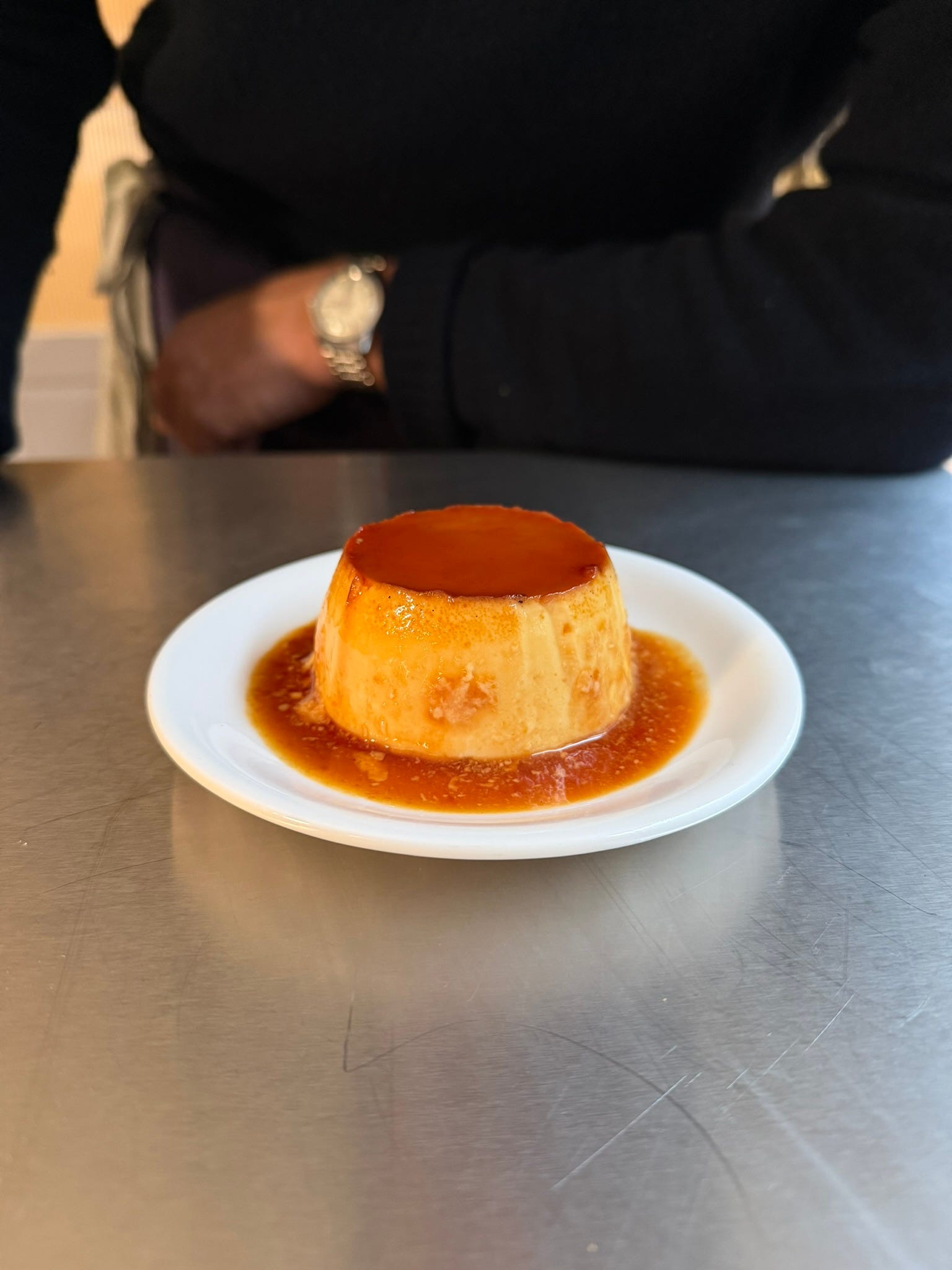
I’m a custard-head, man! Whether I’m pouring it on a crumble, baking it into a tart or turning it out of a mould, velvety vanilla-infused custards deliver a near unrivalled culinary pleasure. My introduction to the combination of caramel and custard was an early one. Growing up, we’d go off on holiday to europe and little plastic pots with a mysterious silver foil where bought from exciting, unrecognisable supermarkets. Upturn the pot onto a plate and rip the metal strip off and out would plop a delightful dessert, an imitation-vanilla tasting wobbly mass of custard. It was, and still is, completely delicious. A dessert well loved across France and the rest of the world, too. Now, whilst indulgent, a good custard-based dessert (a grown-up one at least) should be well balanced.
How does one achieve balance with such few ingredients? Well, in order to not overwhelm the palate with richness, I cut the cream with milk, season the whole lot with a pinch of good sea salt to enhance that vanilla flavour and of course, play with the sugar. The French get it. You split the sugar across the dessert, obviously? One portion is caramelised to the point of moreish bitterness, the remainder is used to boost the flavour of the vanilla in the custard. Just as without salt, a tomato is naff, without sugar, vanilla is nothing. A bonus, and one we’re leveraging in today’s recipe, is to add a little booze to your custard, which in my mind is quite French, but somebody in the comments found the idea abhorrent.
“I hear a million French voices crying out into the darkness “non”. Please drink the Sauternes instead” - glittermonk3y, via Instagram on tuesday.
Well, I don’t care, I did it and it’s delicious.
THE CUSTARD
Custards are all pretty similar in construction, where they differ is that ratio of the ingredients. The formula of liquid to eggs and starches changes across different recipes. A pastry cream has lots of egg and starch in it to make a rich, thick, stable custard whereas, a crème anglaise has no starch, more liquid and less egg to yield a silky, pourable texture. The goal with a crème caramel is to create a wobbly, silky, velvety custard that is rich but not too rich. I cut the double cream with milk to pare back the fat a little and use a combination of whole eggs as well as yolks to do the same. If you wanted to make an ultra-luxe crème caramel, you can go 100% double cream and 100% yolk, go full gout-mode and live like Henry VIII, but that ain’t the one for me.
What is a custard, without vanilla? Well it could be chocolate, or tonka bean, or bay leaf, or even Sauternes, but let’s be honest, vanilla is the king. I like to use fresh pods, but I know they’re expensive, so I have included some other options and further notes on vanilla below.
THE CARAMEL
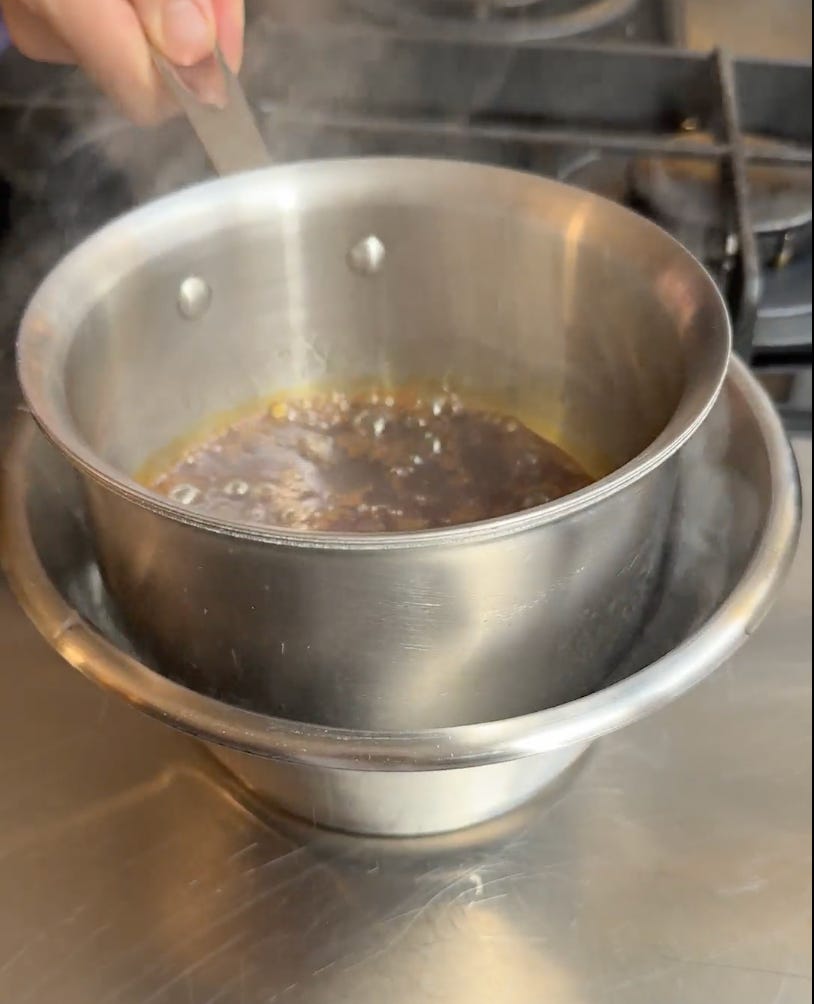
In this dessert the caramel is the yin to the custards yang. Let’s get into (briefly) the world of syrups and caramel.
Syrups are a combination of sugar and water and can be made with any sugar. If you add a 1:1 ratio of sugar to water you make what’s known as a simple syrup. You can adjust the ratio depending on what you’re planning to do with the syrup and you can add heat to change the texture, too. If you heat syrup long enough and you take your syrup north of 160°C, you’re in caramel country...